


GITEX: The Epicentre for Europe’s Digital Future Converges in Berlin
- 4. März
- 4 Min. Lesezeit
Germany's largest and most global startup event: From AI gigafactories and sovereign cloud infrastructure to open source standards, GITEX AI EUROPE 2026 returns to Messe Berlin from 30 June to 1 July 2026 as the defining platform for Europe’s intelligent economy. It aims to unite startups, industry leaders, investors and policymakers for the acceleration of the continent’s next phase in technological development.

by Archie Marshall || 5 March 2026
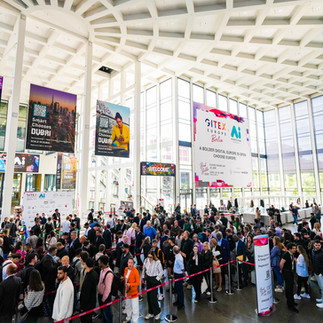
From 30 June to 1 July 2026, Berlin will once again host one of the continent’s most internationally connected technology gatherings as GITEX AI Europe returns to Messe Berlin. Positioned as Germany’s largest and most globally influential startup and digital investment event, the show gives platform to enterprises, SMEs, high-growth startups, investors, policymakers and researchers from across Europe and beyond. In a period where artificial intelligence and digital infrastructure are reshaping industrial strategy, the event functions not merely as a showcase, but as a strategic meeting point for Europe’s intelligent economy.


Ahead of the 2026 edition, GITEX AI Europe has published a new whitepaper, Digital Sovereignty: Technology Leadership Made in Europe, developed in partnership with research firm LUE. The study sets out a clear framework for Europe’s next phase of technological competitiveness, identifying four structural imperatives: scalable compute power, sovereign cloud infrastructure, open-source foundations and deeper capital formation.
With Europe’s ICT market now valued at approximately €1.02 trillion, the paper argues that sustained leadership will depend on coordinated efforts across infrastructure, investment and policy rather than the common isolated national initiatives.

Central to the report is the question of compute. Europe’s data centre capacity is projected to expand around 70 percent by 2030, yet demand driven by AI workloads is expected to rise even faster. Germany alone may need to triple its data centre footprint by the end of the decade, which implies investment requirements of up to €60 billion to meet the projected demand.
At EU level, programmes such as the €200 billion InvestAI initiative, including five AI gigafactories equipped with more than 100,000 specialised GPUs each, are designed to anchor this expansion. Importantly, these facilities are intended to serve not only multinational corporations but also startups and research institutions, allowing access to higher performance compute across the innovation sector. The study emphasises that such growth must be synchronised with clean energy integration, reinforcing the link between digital sovereignty and Europe’s energy transition.

Cloud autonomy forms the second pillar. While a significant proportion of European enterprises already host large segments of their applications in the cloud, further adoption of this standard is set to accelerate sharply in the coming years. At present, roughly 70 percent of the European cloud market remains controlled by non-European hyperscalers. The whitepaper calls for a sovereign-first architectural approach that guarantees legal jurisdiction and control of data within European frameworks. The objective is to ensure that European businesses can innovate freely while maintaining regulatory clarity.
Open-source technologies are presented as a structural advantage in achieving this balance. Initiatives such as the Sovereign Cloud Stack, supported by Germany’s Federal Ministry for Economic Affairs and Climate Action, demonstrate how these standards based infrastructures can reduce vendor dependency while strengthening transparency. By embedding open standards into cloud and digital infrastructure, European organisations gain flexibility to migrate across platforms and collaborate internationally without surrendering control of their critical systems.


However, infrastructure and standards must be matched by capital depth. Despite Europe’s strong engineering base and excellence in research, only a small share of global venture capital currently flows into the EU technology ecosystem. The whitepaper highlights the need for growth financing mechanisms capable of retaining and scaling Europe’s tech innovators in areas such as AI, semiconductors, cloud and cybersecurity. Public-private co-investment structures are already emerging, including Germany’s €1 billion KfW DeepTech Future Fund and the €3 billion Important Project of Common European Interest focused on next-generation cloud and semiconductor capabilities. The broader message is abundantly clear, sovereignty is achieved through scale, and scale requires sustained investment.
The 2026 edition builds on a strong inaugural year that brought together more than 1,400 enterprises and startups from over 100 countries, alongside 600 investors and 500 speakers shaping the global technology agenda. Organised by KAOUN International and endorsed by the Berlin Senate Department for Economics, Energy and Public Enterprises, with support from Berlin Partner for Business and Technology, the event continues to expand its role within the wider GITEX global network spanning Abu Dhabi, Dubai, Brazil, Egypt, Germany, Kazakhstan, Kenya, Morocco, Nigeria, Serbia, Singapore, Türkiye and Vietnam.

Dedicated arenas for unicorns, scale-ups and SMEs will again be central to the programme, including North Star Europe, the continental edition of one of the world’s largest startup and investor platforms. Across AI, quantum, cybersecurity, green tech, data centres and digital infrastructure, the 2026 gathering positions Berlin as a defining hub for collaboration between industry, capital and policy.
Registration for GITEX AI Europe 2026 is now live, with discounted passes currently available for a limited period. As Europe accelerates its pursuit of digital sovereignty, the conversations taking place at Messe Berlin this summer are likely to shape not only the region’s technology strategy, but its broader economic trajectory for the decade ahead.
TAKE OUT
Over many years, GITEX Global in Dubai has developed into the world's leading ICT trade fair, boasting over 6,800 exhibitors and 1,200 investors. The Swiss ICT industry made a strong showing at GITEX Global from October 13-17, 2025 , and not for the first time. The inaugural GITEX Europe in Berlin in June 2025, with 1,400 exhibitors and 600 investors, was also a success.

Video: The Swiss Pavilion at GITEX Global in Dubai from October 13th to 17th, 2025.